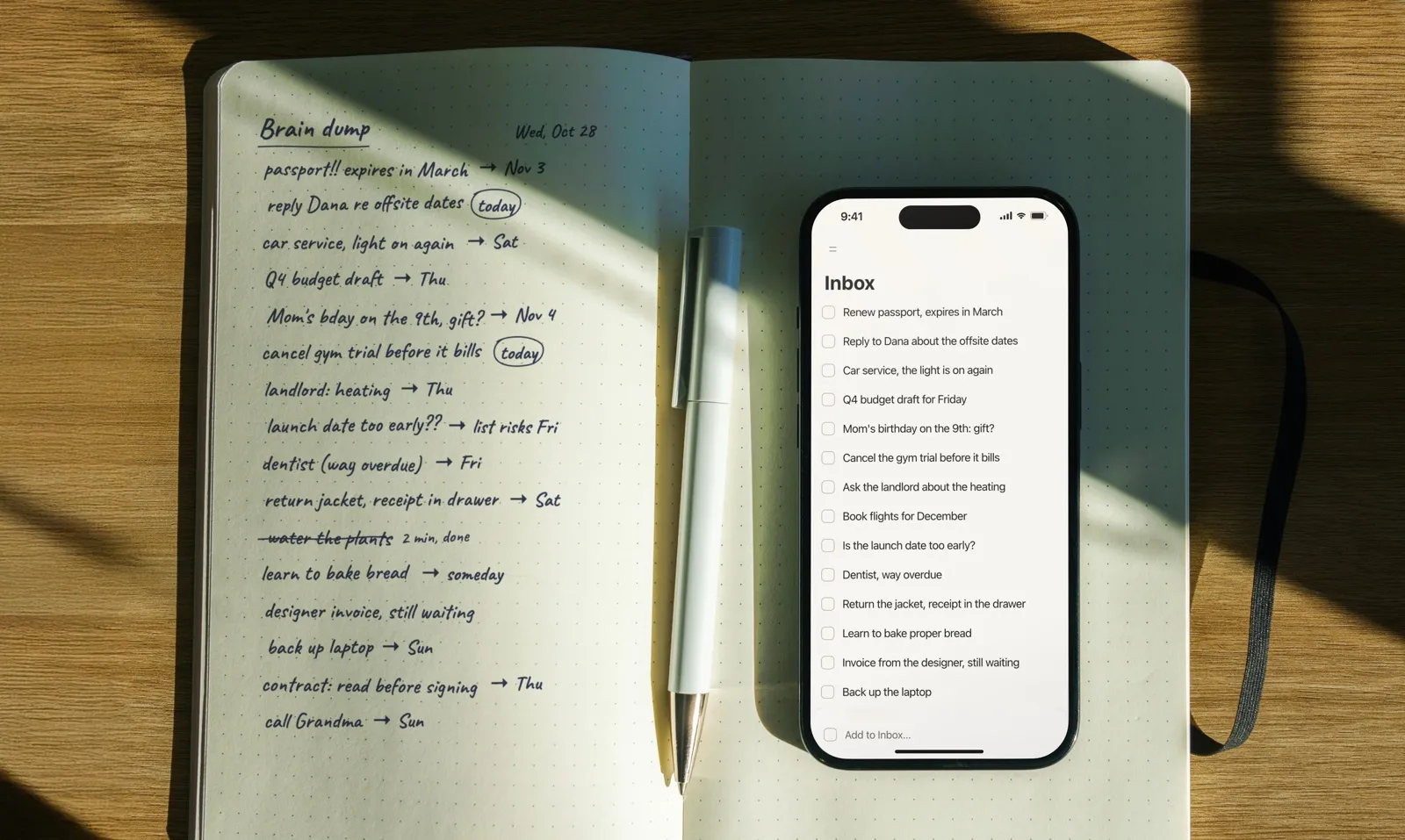
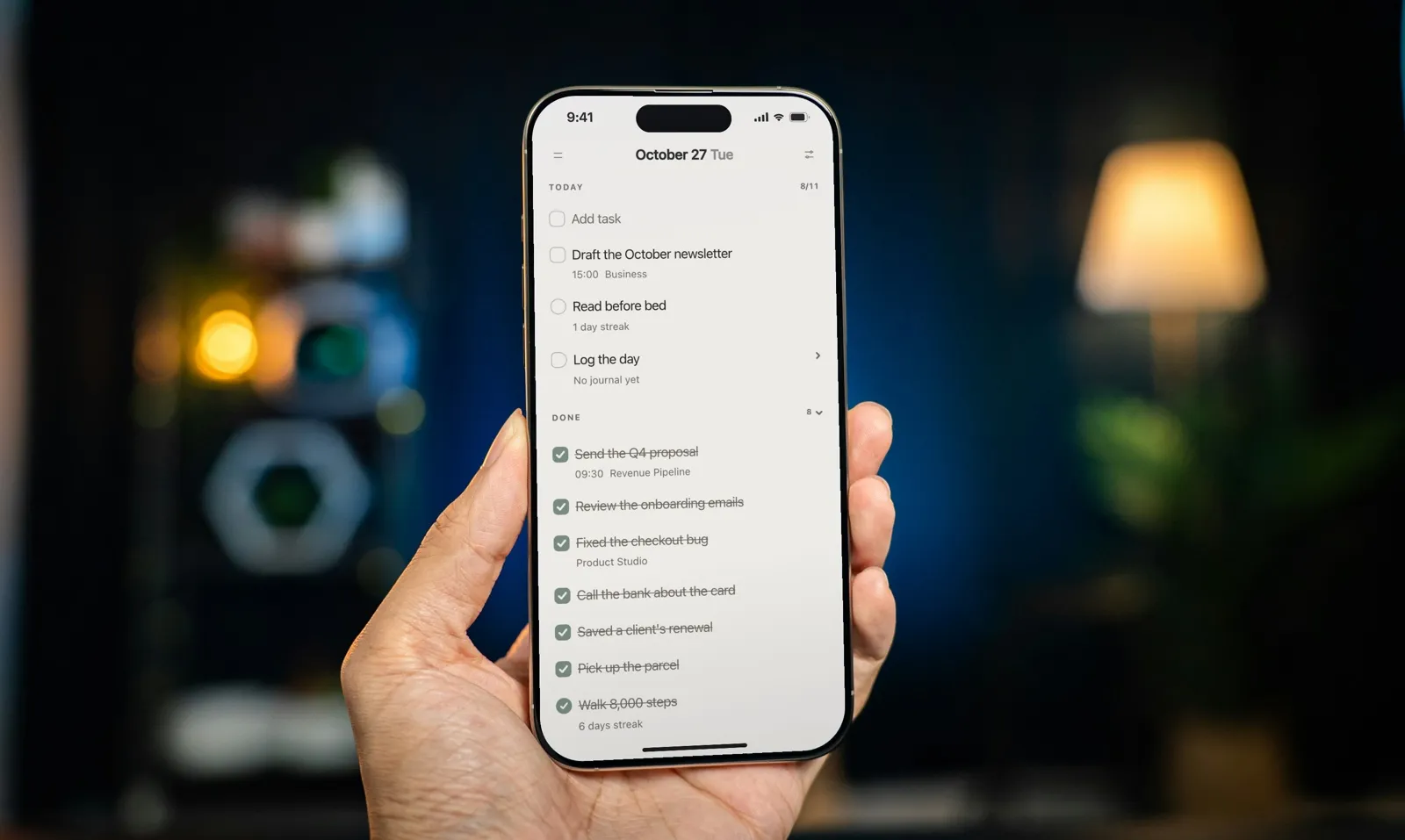
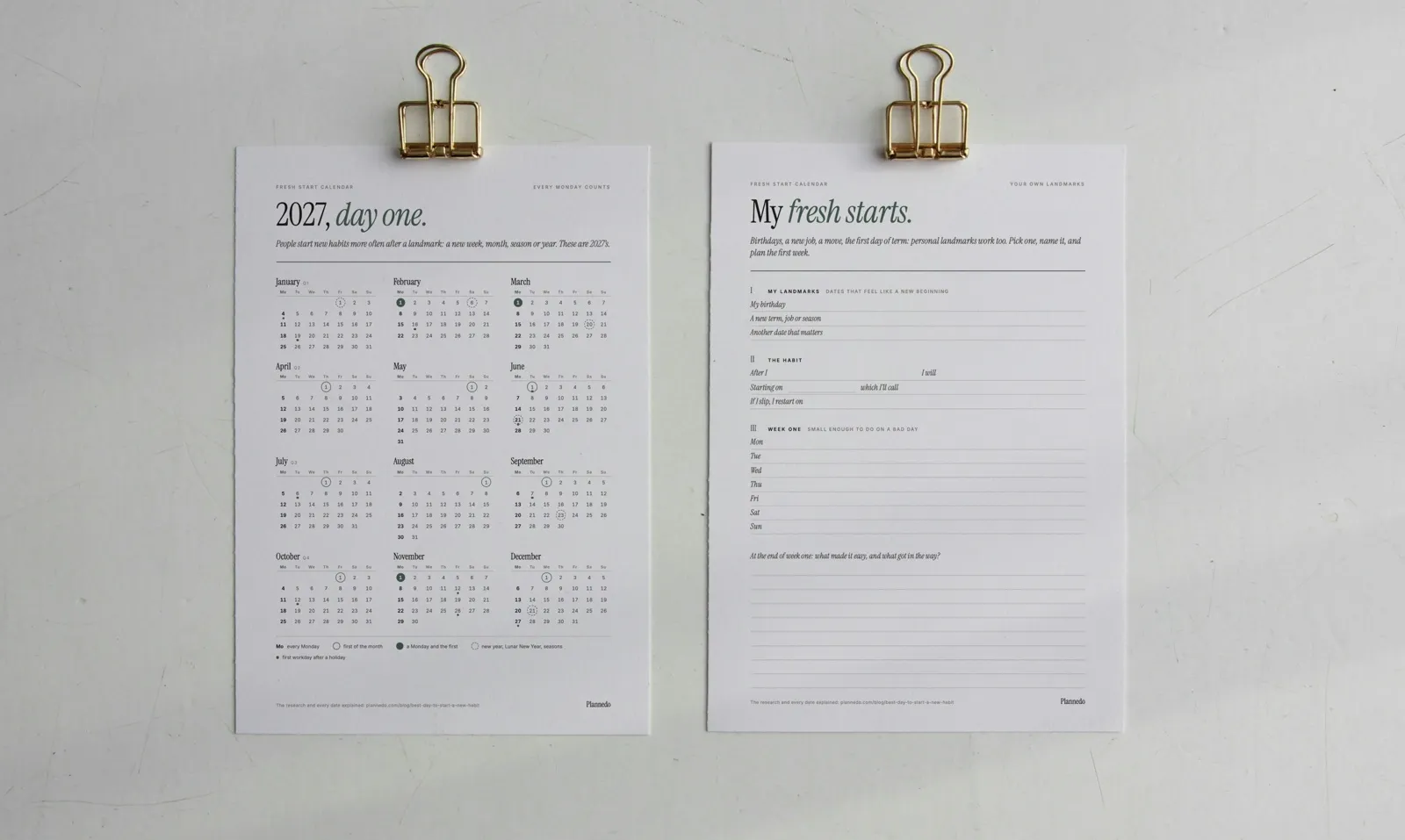
How to Plan Your Day the Night Before (10-Minute Routine)
Plan your day the night before in 10 minutes: what to write, why a specific to-do list helps you fall asleep faster, and the 2-minute morning check that saves the plan.
To plan your day the night before, take ten minutes in the evening: close today, look at tomorrow’s fixed appointments, pick the first task and give it a time, and write three to five specific tasks. In the morning, spend two minutes reading the plan and deciding what you’ll do if the day gets interrupted.
Both halves have research behind them. In a sleep-lab study, people who spent five minutes writing a specific to-do list for the coming days fell asleep about nine minutes faster than people who wrote about what they had already done. And a study of real workdays found that ordinary planning helps less and less as interruptions pile up, while planning for the interruptions keeps working. The evening list helps you fall asleep and gives the day a first move; the morning check fits the plan to the day you actually get.
I build Plannedo, a daily planner, so the examples are from there. The routine works just as well with a notebook.
Should you plan your day the night before or in the morning?
Do both, because they do different jobs.
| The night before | In the morning | |
|---|---|---|
| Time | About 10 minutes | About 2 minutes |
| What it’s good for | Closing today, getting tasks out of your head before sleep, deciding the first task while you still remember the context | Adjusting to news, weather and energy, and planning for what’s likely to interrupt you |
| What goes wrong without it | The morning starts with email, and the first hour goes to whatever arrives first | The plan breaks at the first interruption, and the day goes back to reacting |
If you can do only one, do the evening. You have the day’s context fresh: you know what got stuck, what someone promised you, what you’ll regret not starting. In the morning, that context is gone and the inbox is already open.
Benefits of planning your day the night before
- You fall asleep faster. In a sleep-lab study, writing a specific to-do list before bed shortened the time to fall asleep.
- Tomorrow stops circling. A concrete plan stops unfinished tasks from intruding on your thoughts.
- The day starts with the important thing, decided while you still remember why it matters, not with whatever is in your inbox.
Here’s the research behind each.
Writing a to-do list before bed helps you fall asleep
In 2018, Baylor University psychologist Michael Scullin and colleagues brought 57 healthy adults aged 18 to 30 into a sleep lab and measured their sleep with polysomnography. Before lights out, each person spent five minutes writing. Half wrote a to-do list for the next few days; the other half wrote about tasks they had completed in the last few days.
The to-do list group fell asleep significantly faster, on average about nine minutes faster. And the more specifically people wrote their to-do lists, the faster they fell asleep. For the people who wrote about completed tasks, the trend went the other way: the more detail, the longer it took. That makes a list of what you’ve done a poor bedtime ritual, not a bad idea: a ta-da list belongs at the end of the working day.
It’s one study, with a small and young sample and one night in a lab, so treat it as a strong hint rather than a law. It fits the authors’ starting point: worrying about unfinished tasks is one of the common reasons people lie awake, and putting those tasks on paper seems to quiet them. When the list in your head is long, a five-minute brain dump before planning gets it all onto paper first.
A plan lets your mind put tomorrow down
Why would writing tasks down help? In a 2011 set of experiments, E. J. Masicampo and Roy Baumeister left people with an unfinished goal and watched what it did to the rest of their thinking. It kept getting in: more stray thoughts about it while reading something unrelated, and worse scores on an unrelated word puzzle. Writing a specific plan for the goal made those effects go away, even though the goal itself was still unfinished.
That’s the case for doing it in the evening: tomorrow’s work stops circling once it has a place and a time.
Morning plans break on busy days, unless they plan for the interruptions
Michael Parke and colleagues followed employees for two weeks and compared days when they planned with days when they didn’t. They separated two kinds of planning. Time management planning, making a task list, setting priorities and deciding when to do what, helped performance, but its benefit shrank on days with many interruptions. Contingent planning, thinking ahead about likely interruptions and how to handle them, helped no matter how interrupted the day was.
That’s what the two-minute morning check is for: you already have the list, so the morning is the moment to ask what will get in its way.
If-then plans make the follow-through automatic
The best form for “what I’ll do if this happens” is an if-then plan: “If a client calls before 10, I’ll call back after the launch post.” In a 2006 meta-analysis of 94 tests, Peter Gollwitzer and Paschal Sheeran found that plans in this form had a medium-to-large effect on reaching goals. There’s more on how to write them in the WOOP method.
How to plan your day the night before: a 10-minute routine
Do it at the same time every evening. Close to bedtime is fine, as in the sleep study: it’s ten minutes with a list, not an hour with your phone.
1. Close today (3 minutes)
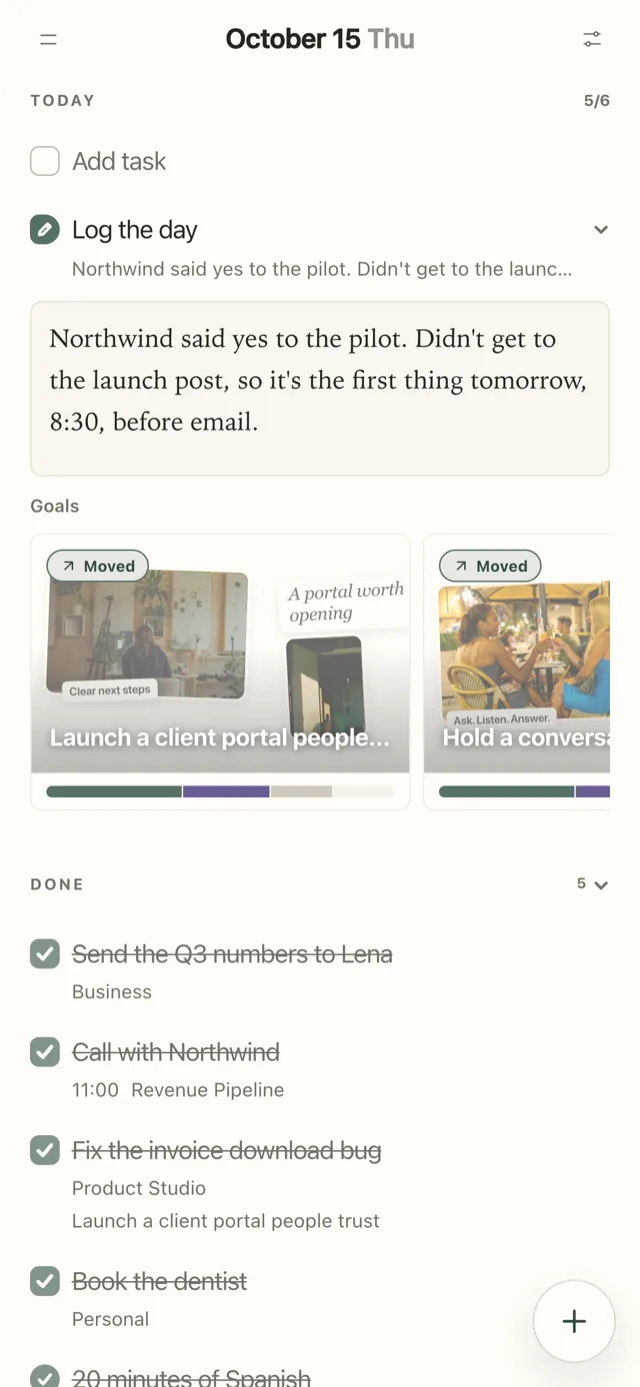
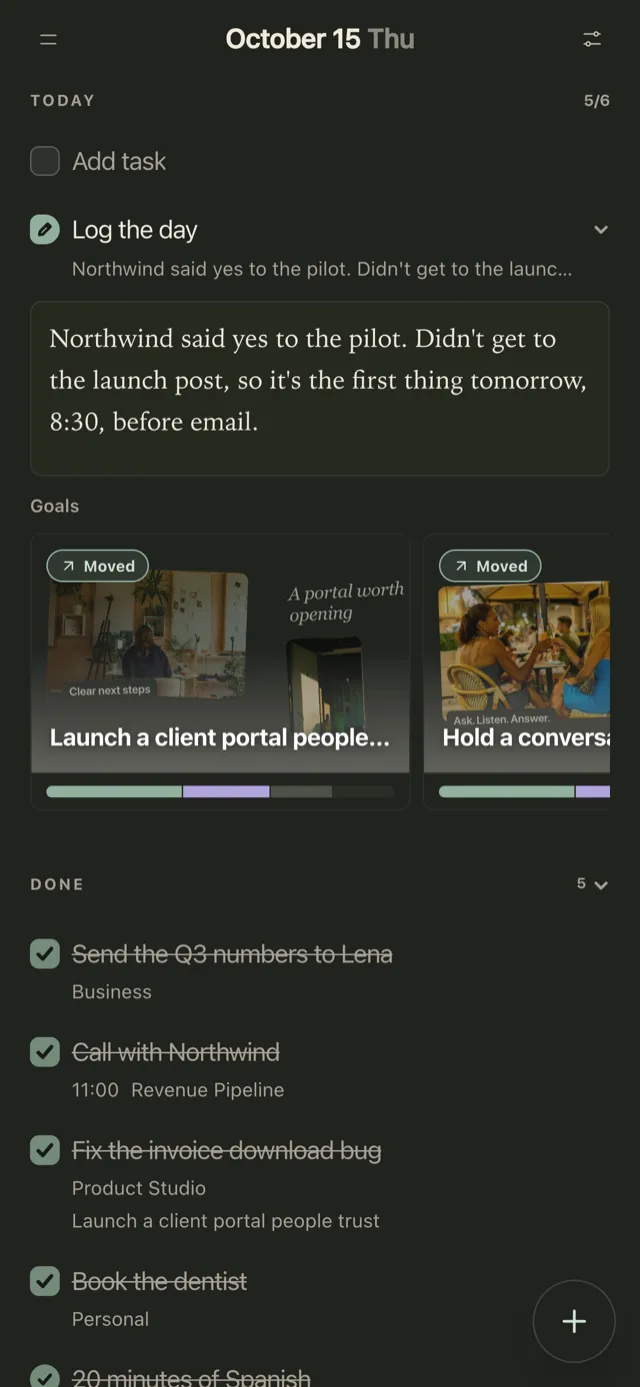
Tick off what you finished. Then give every task that’s still open an answer: tomorrow, another day, or delete. Nothing stays on today’s list overnight. Finish with one line about the day: what moved, what got stuck and why. Kept up, that line becomes a one line a day journal.
2. Look at tomorrow’s fixed points (1 minute)
Open tomorrow’s calendar. Meetings, appointments, deadlines, the school pickup: these are the walls of tomorrow, and the plan has to fit between them.
3. Choose the first task and give it a time (2 minutes)
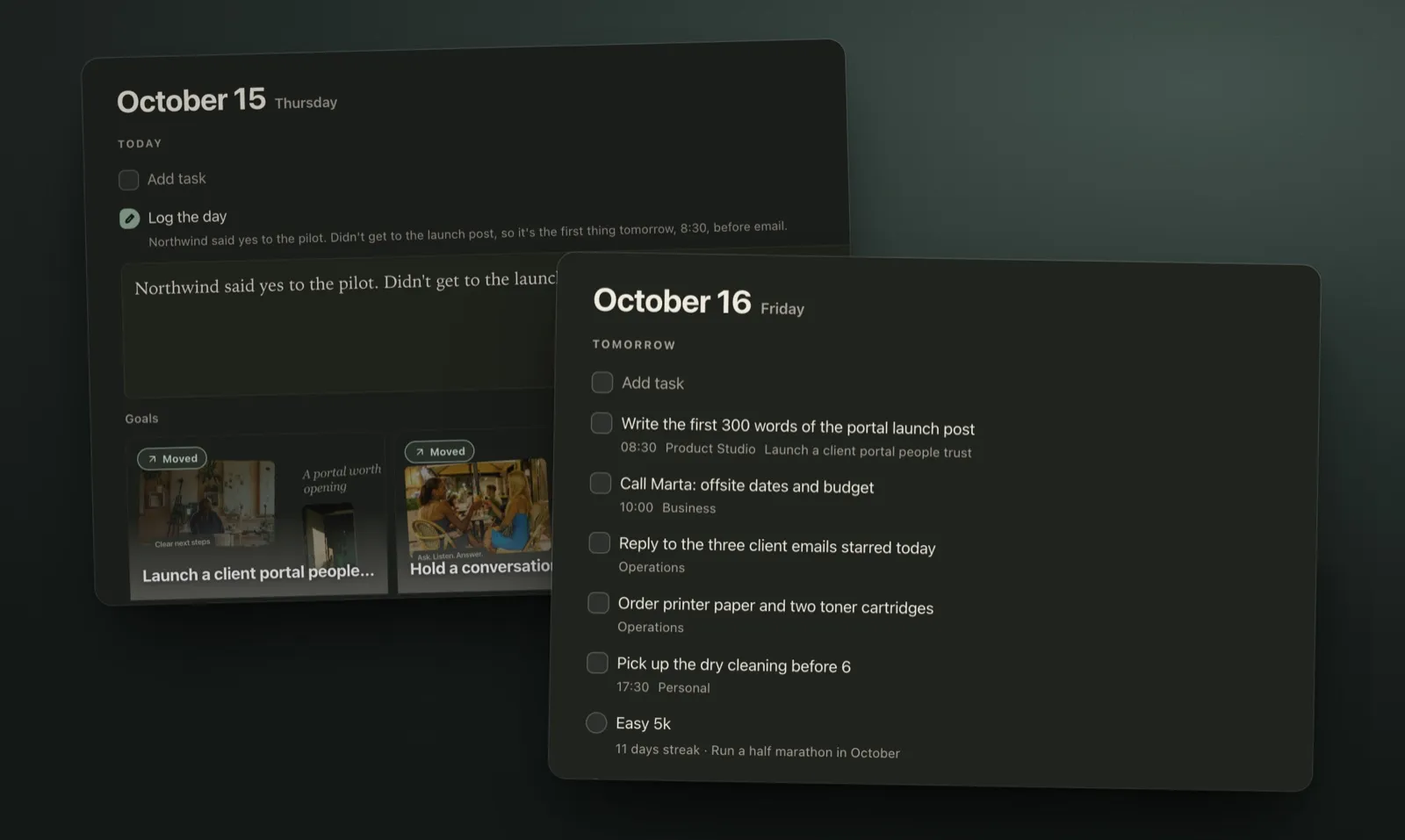
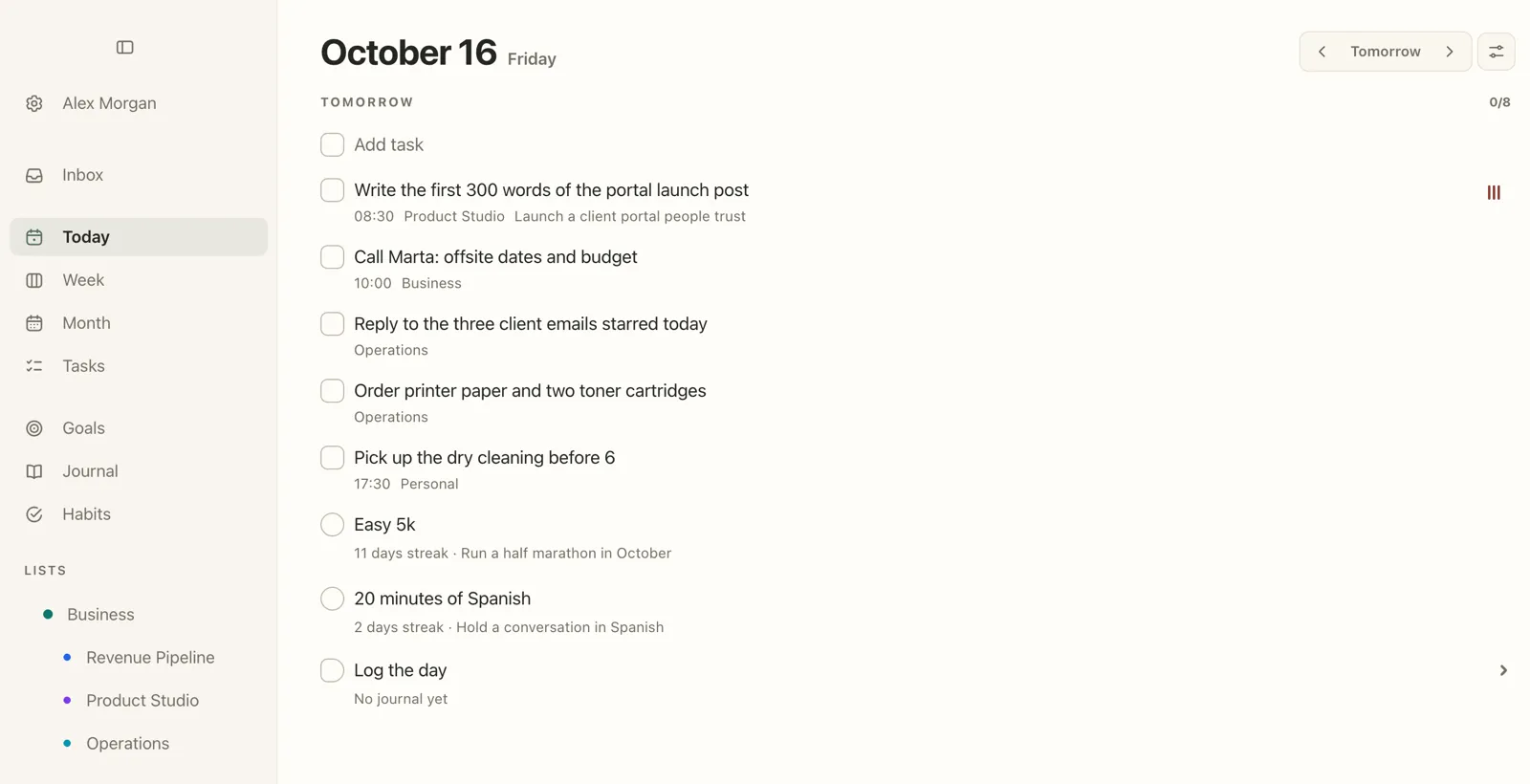
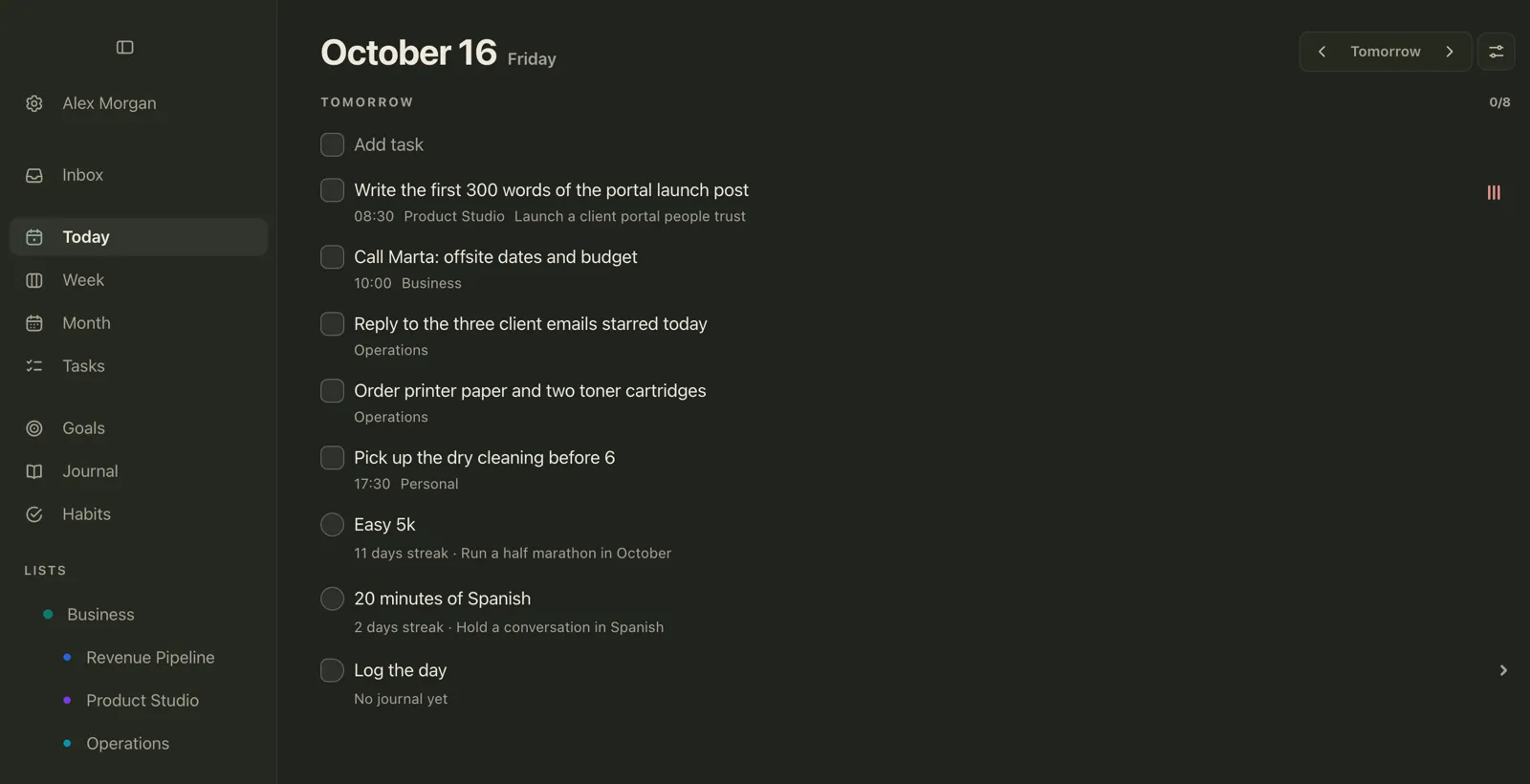
Ask: which task would I most regret not starting tomorrow? Give it a time early in the day and do it before you open email. In the example, the launch post that didn’t happen today goes to 8:30.
4. Write three to five more tasks, specifically (3 minutes)
Specific means a verb, an object and, where it helps, a number or a name. “Emails” is a worry; “Reply to the three client emails I starred today” is a task. Specific tasks are easier to start in the morning, and in Scullin’s study, more specific lists went with falling asleep faster.
Keep the list short. If you regularly finish five things a day, a plan for twelve is a list of reasons to feel behind. The weekly review is where you check that number, and how to plan your week is where you set it.
5. Set up the first step (1 minute)
Make the first task easy to start: open the document and leave it on the screen, put your running shoes by the door, put the book on the desk. In the morning, starting should take no decision at all.
The 2-minute morning check
In the morning, before opening email:
- Read the list. If something changed overnight, move one task rather than rebuilding the plan.
- Ask what’s most likely to interrupt you today, and write one if-then plan for it.
A few examples:
- “If a client calls before 10, I’ll call back after the launch post.”
- “If the 8:30 slot disappears, the post moves to 14:00, not to tomorrow.”
- “If it’s raining at 7, I’ll run on the treadmill at lunch.”
That’s all. The evening did the thinking; the morning just checks it against the day. If you want the rest of the morning on rails too, here’s a morning routine checklist.
What to write on tomorrow’s to-do list
| Vague | Specific |
|---|---|
| Launch post | Write the first 300 words of the launch post |
| Marta | Call Marta: offsite dates and budget |
| Emails | Reply to the three client emails I starred today |
| Office stuff | Order printer paper and two toner cartridges |
| Run | Easy 5 km before work, shoes by the door |
| Errands | Pick up the dry cleaning before 6 |
A good test: could someone else start the task from the line alone, without asking you a question? If not, add the missing word.
Night-before checklist
Copy this into your planner or notes:
- Tick off what’s done today
- Give every open task a new day, or delete it
- Write one line about today
- Check tomorrow’s calendar and deadlines
- Pick the first task and give it a time
- Add three to five specific tasks, and stop there
- Set up the first step
- In the morning: read the list and write one if-then plan
When planning the night before doesn’t help
- If it keeps you awake instead of settling you, move it earlier, to the end of the workday or right after dinner, and keep the bedtime part to the list itself.
- If your days are unpredictable, shift work, small children, on-call jobs, plan only the fixed points and the first task, and lean on if-then plans more than on a long list.
- If the list is always too long, the evening isn’t the problem; the size of the plan is. Plan to what you actually finish, not to what you hope to.
How to plan tomorrow in Plannedo
| Step | Where |
|---|---|
| Close today | Today: tick things off, move what’s left, and write a line in Log the day (Evening check-in) |
| Open tomorrow | The arrow next to the date on Today, or Pick a date → Tomorrow; on a phone, tap the date (Today) |
| Move a task to tomorrow | Open it and set the date to Tomorrow, or drag it to the next day on Week |
| First task with a time | Add the task, then set its time and priority |
| Remember to do it | Settings → Daily reminders: an evening reminder to close the day and a morning one to check the plan (Pro) |
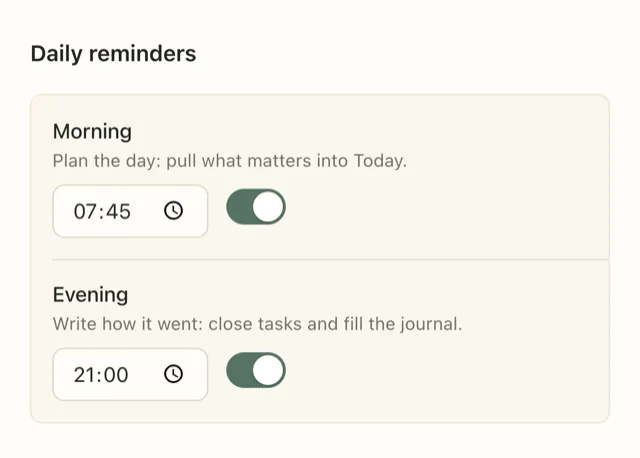
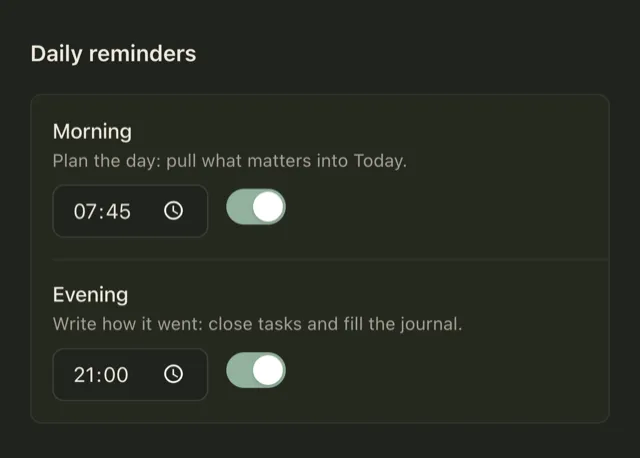
The evening reminder opens Today, so closing the day and opening tomorrow are one tap apart. Both reminders are part of Pro; everything else here works on the free plan. Details are in Daily reminders.
FAQ
Should you plan your day the night before or in the morning?
Both. Plan the night before, when you still remember the day’s context: close today, choose the first task and write a short, specific list. Then spend two minutes in the morning checking it and planning for likely interruptions. If you can only do one, do the evening.
What are the benefits of planning your day the night before?
You start the morning knowing your first task instead of opening email, you fall asleep with fewer open loops, and in one sleep-lab study, people who wrote a to-do list before bed fell asleep about nine minutes faster than people who wrote about what they had done.
How long should planning the next day take?
About ten minutes in the evening and two in the morning. If it takes longer, the list is probably too long or too vague.
Does writing a to-do list before bed help you sleep?
In a 2018 study of 57 young adults in a sleep lab, those who wrote a to-do list for five minutes before bed fell asleep faster than those who wrote about completed tasks, and more specific lists went with faster sleep. It’s one small study, but the habit costs five minutes.
What should I put on tomorrow’s to-do list?
One first task with a time, then three to five specific tasks, each with a verb and a clear object, plus the fixed appointments of the day. Leave room: the day will add its own tasks.
What if my plan for the day falls apart?
Plan for it in the morning with an if-then plan for the most likely interruption, such as “If the 8:30 slot disappears, the task moves to 14:00.” When the plan breaks anyway, move one task, not the whole day, and close the day as usual in the evening.
Studies mentioned
- Scullin, M. K., Krueger, M. L., Ballard, H. K., Pruett, N., & Bliwise, D. L. (2018). The effects of bedtime writing on difficulty falling asleep: A polysomnographic study comparing to-do lists and completed activity lists. Journal of Experimental Psychology: General, 147(1), 139-146. The nine-minute figure is from Baylor’s summary of the study.
- Masicampo, E. J., & Baumeister, R. F. (2011). Consider it done! Plan making can eliminate the cognitive effects of unfulfilled goals. Journal of Personality and Social Psychology, 101(4), 667-683.
- Parke, M. R., Weinhardt, J. M., Brodsky, A., Tangirala, S., & DeVoe, S. E. (2018). When daily planning improves employee performance: The importance of planning type, engagement, and interruptions. Journal of Applied Psychology, 103(3), 300-312.
- Gollwitzer, P. M., & Sheeran, P. (2006). Implementation intentions and goal achievement: A meta-analysis of effects and processes. Advances in Experimental Social Psychology, 38, 69-119.