Year in Review Questions: 60 to Ask Yourself (+ Printable)
Year in review questions that turn a blurry year into clear lessons: 12 core questions, 48 more by life area, sets for couples and kids, and a free printable.
Year in review questions work best in three passes. First walk the year month by month with your calendar, photos and notes open. Then answer a short set of questions about what happened and what worked. Finish by deciding what you carry into next year. Below are 12 core questions, 48 more by area of life, sets for couples and kids, and a free printable.
The order matters more than the questions. Ask “what did I do this year?” cold, in a December evening, and the honest first answer is usually “not much”. Ten minutes with the calendar proves that wrong every time. So this guide starts with the evidence and only then gets to the questions.
How to do a year in review in 90 minutes
One afternoon is enough. The last week of December and the first week of January are the natural times, but any quiet 90 minutes works, and so does a year that ends on your birthday or with the school year.
| Step | Time | What you do |
|---|---|---|
| 1. Walk the year | 20 minutes | Open your calendar, photos, journal and finished tasks. Write one line for each month. |
| 2. Look back | 45 minutes | Answer questions 1 to 8 below, in writing. |
| 3. Carry it forward | 25 minutes | Keep, stop, start, one word for next year, up to three goals with a first step (questions 9 to 12). |
Write the answers down. Thinking them through on a walk feels like the same thing, but it isn’t: you need something to reread in June and next December.
Why start with evidence, not memory
Memory is a poor record of long stretches of time. In a 1993 experiment, Daniel Kahneman, Barbara Fredrickson, Charles Schreiber and Donald Redelmeier had people hold one hand in painfully cold water at 14 °C for 60 seconds. With the other hand they did the same 60 seconds, then 30 more while the water warmed slightly to 15 °C. Asked which trial they’d rather repeat, a significant majority chose the longer one: more pain in total, but a milder ending. Looking back, people judged each episode by its worst moment and its last one, and its length counted for little.
A year gets remembered the same way. In December you’ll recall November’s mood and two or three loud moments, and March will be gone. Your calendar and your camera roll still have March.
Step 1: Walk the year, month by month
Before any question, collect what the year left behind:
- Calendar: trips, appointments, birthdays, deadlines, the evenings that were booked.
- Photos: scroll month by month. What you photographed is a log of what mattered to you.
- Journal or notes: even a few lines a week bring whole weeks back. If you kept a one line a day journal, this is the day it pays off.
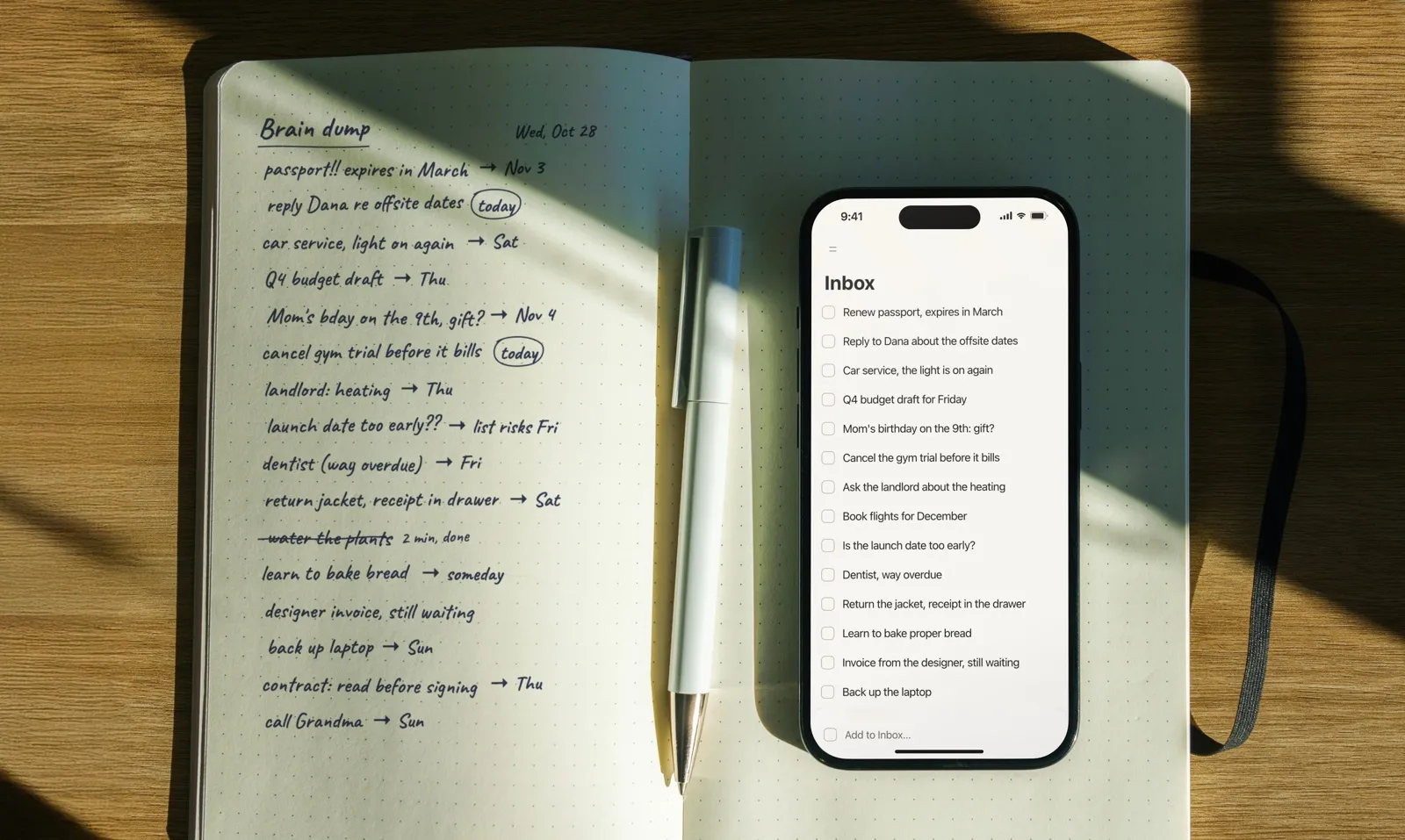
- Finished tasks and old lists: the work you shipped, the forms you filed, the things you fixed.
- Bank statements: where the money went is often where the time went: a course, a gym, a trip, a vet.
- Messages: the threads that were busiest each month.
Then write one line per month: the thing you’d tell a friend about it. “February: flu for two weeks, then the first 10 km without stopping.” Twelve lines like that are the backbone of the review.
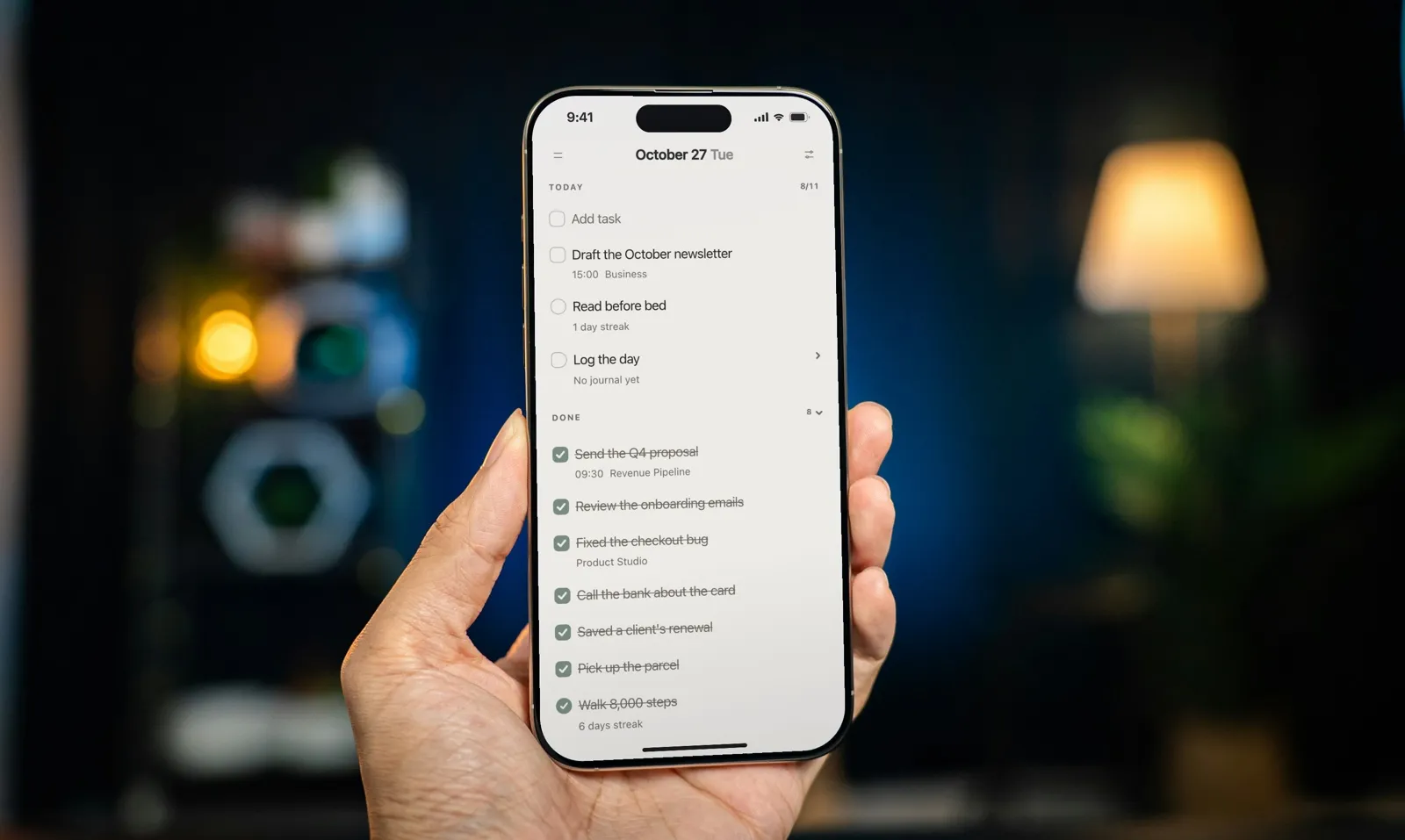
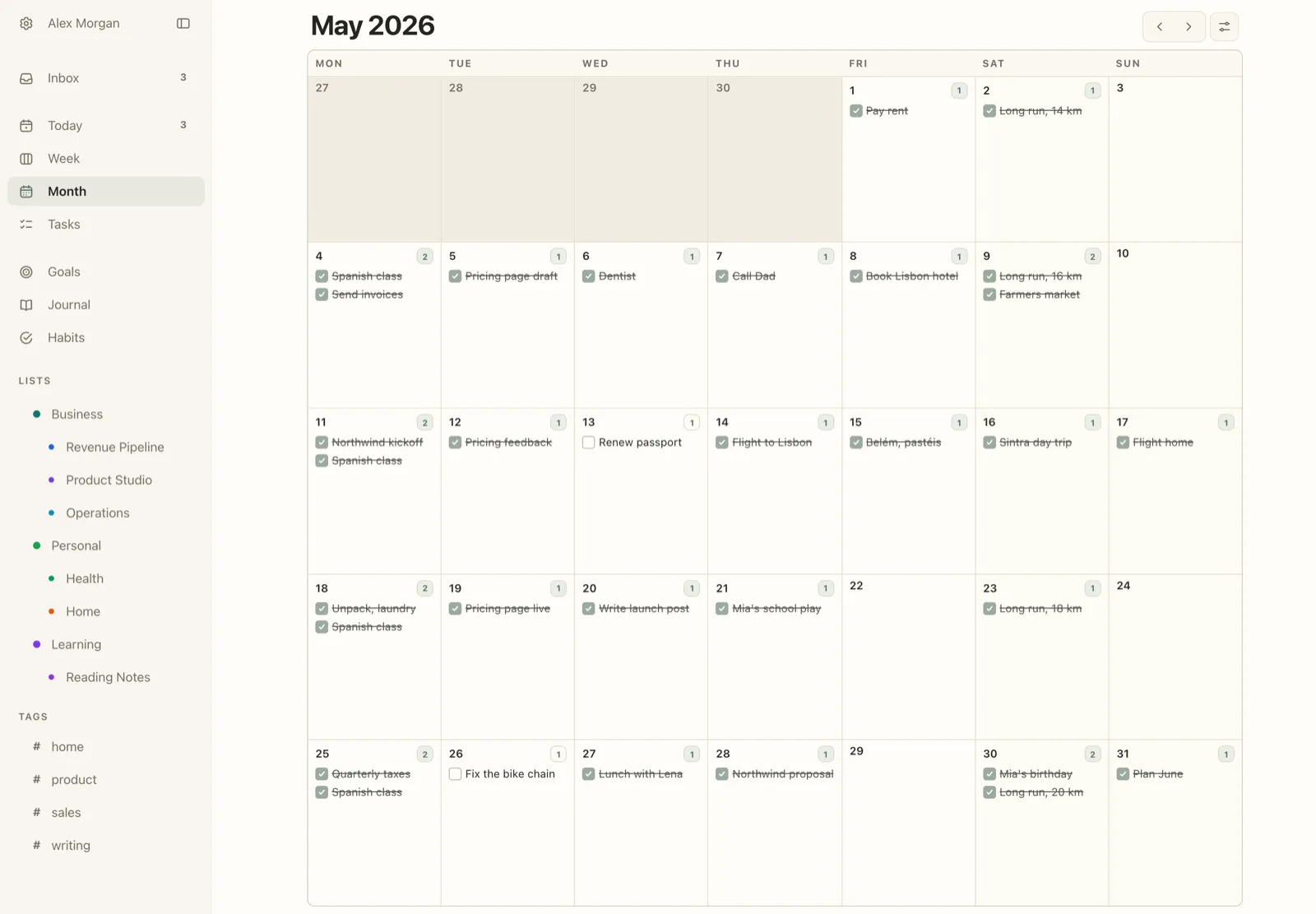
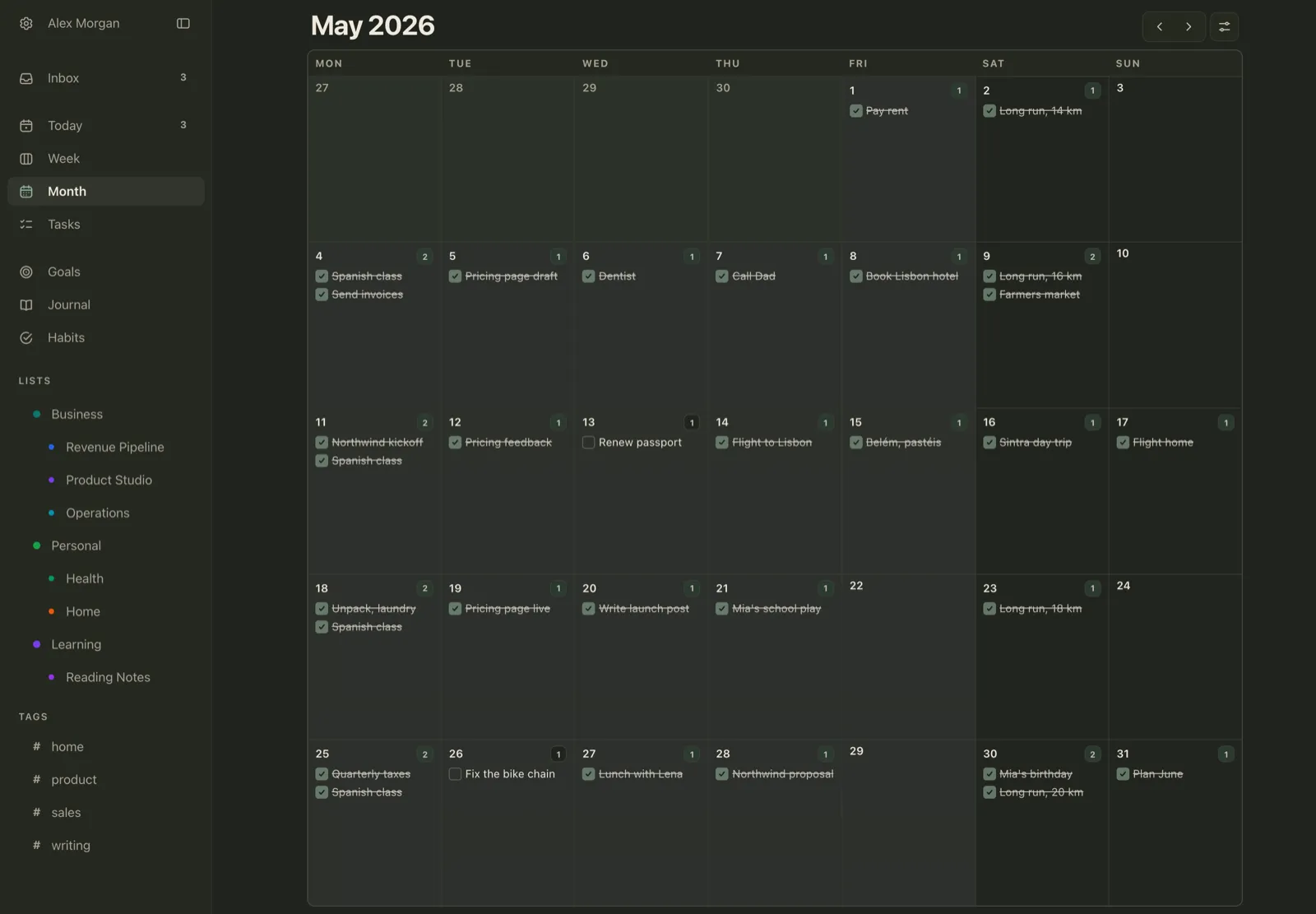
In Plannedo, open Month and press Previous month until you reach January. Each past day shows its tasks, the done ones crossed out, so a month’s line usually writes itself.
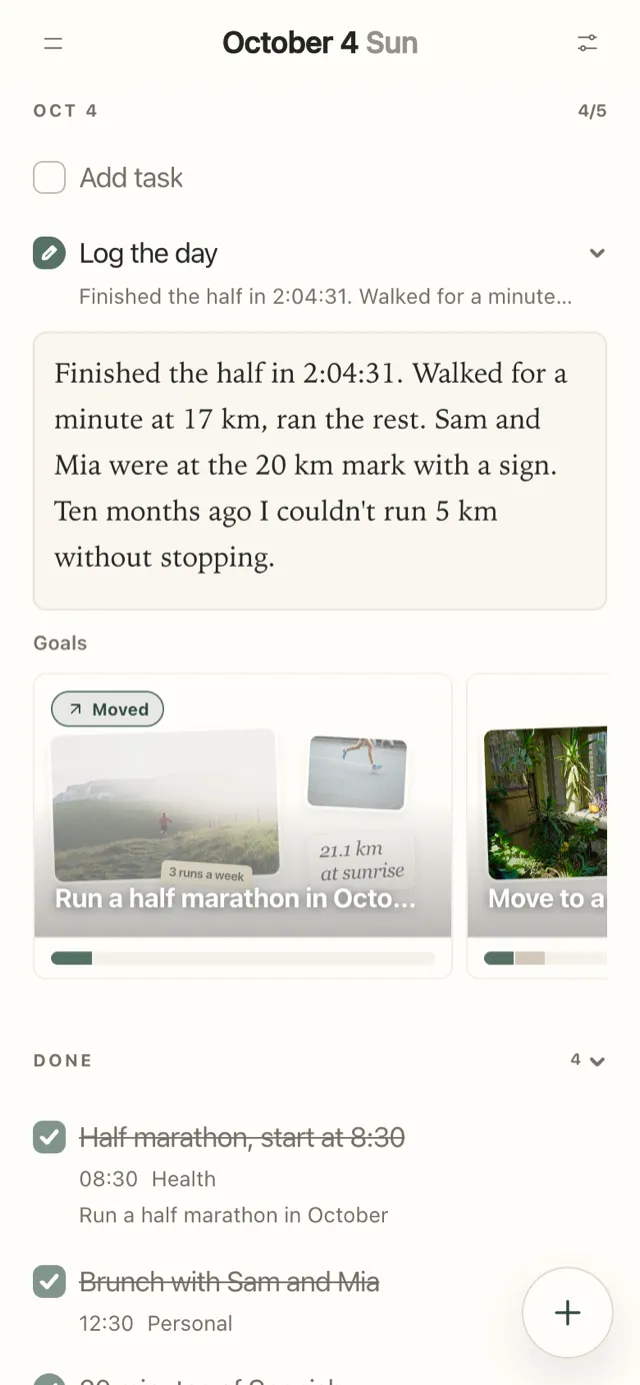
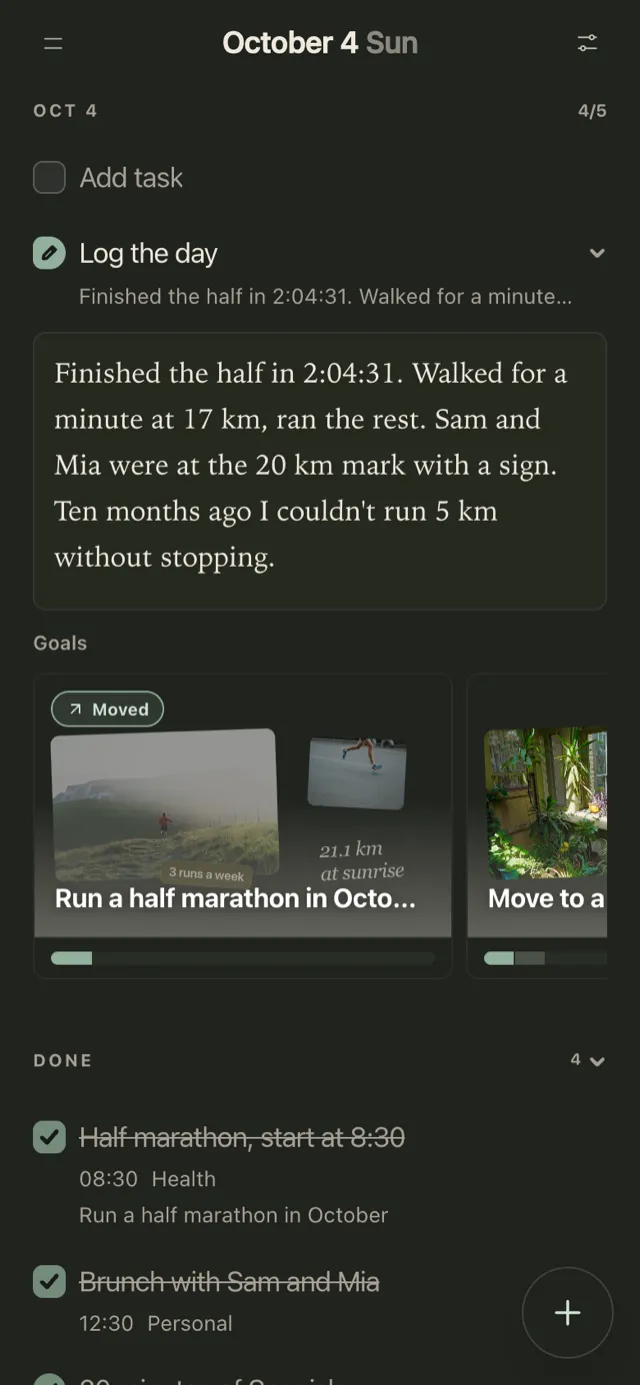
To go deeper on a single day, tap the date at the top of Today (Pick a date) and choose it. You get that day’s tasks, the habits you checked and what you wrote in Log the day that evening. That’s often where the best and hardest moments of question 2 are hiding.
The 12 core year in review questions
These are the ones on the printable. If you only answer twelve questions, answer these.
Looking back
- What am I proudest of from this year? Not the biggest thing, the one you’re proudest of. They’re often different.
- What was the best moment of the year, and what was the hardest? One of each, with the month.
- What did I finish or get through that I’d forgotten about? This list is always longer than it feels. Go back to your twelve lines and count.
- What worked, and why? A routine, a decision, a person, a tool. The “why” is what you can reuse.
- What didn’t work, and what did it teach me? Write it the way you’d talk to a friend who had the same year. That isn’t softness: in experiments by Juliana Breines and Serena Chen, people who reflected on a failure or a weakness with self-compassion were more motivated to improve, and after failing a first test they spent more time studying for the second than people in the comparison groups.
- Who made this year better, and have I told them? In Robert Emmons and Michael McCullough’s studies, people who regularly listed what they were grateful for reported better well-being on several measures than people who listed hassles or ordinary events, most clearly a better mood. The “have I told them” part turns the list into a message you can send tonight.
- Where did my time and energy go that I wouldn’t choose again? Meetings, a side project, a feed, a commitment that outlived its reason.
- Which three words sum up this year? Hard to pick, which is the point.
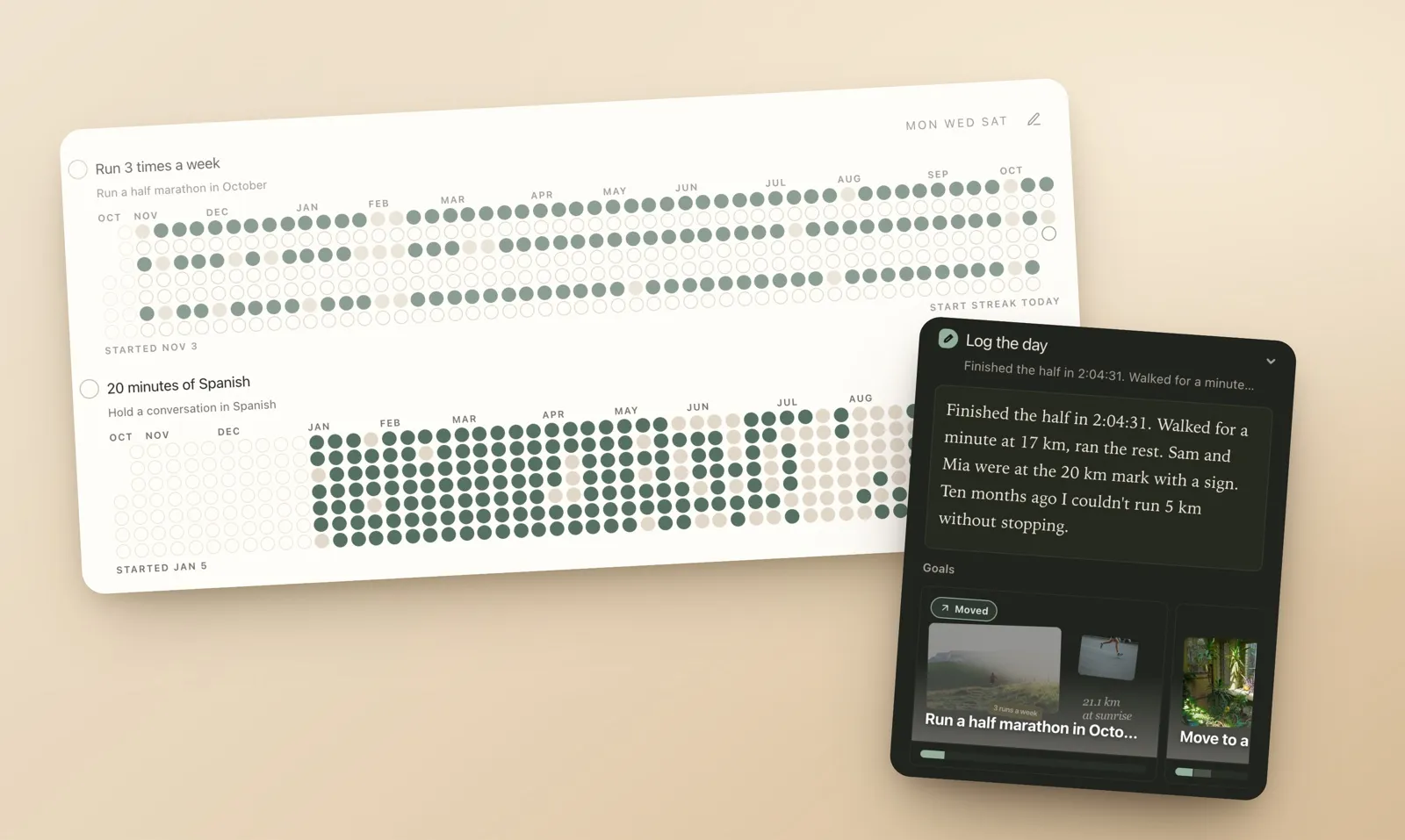
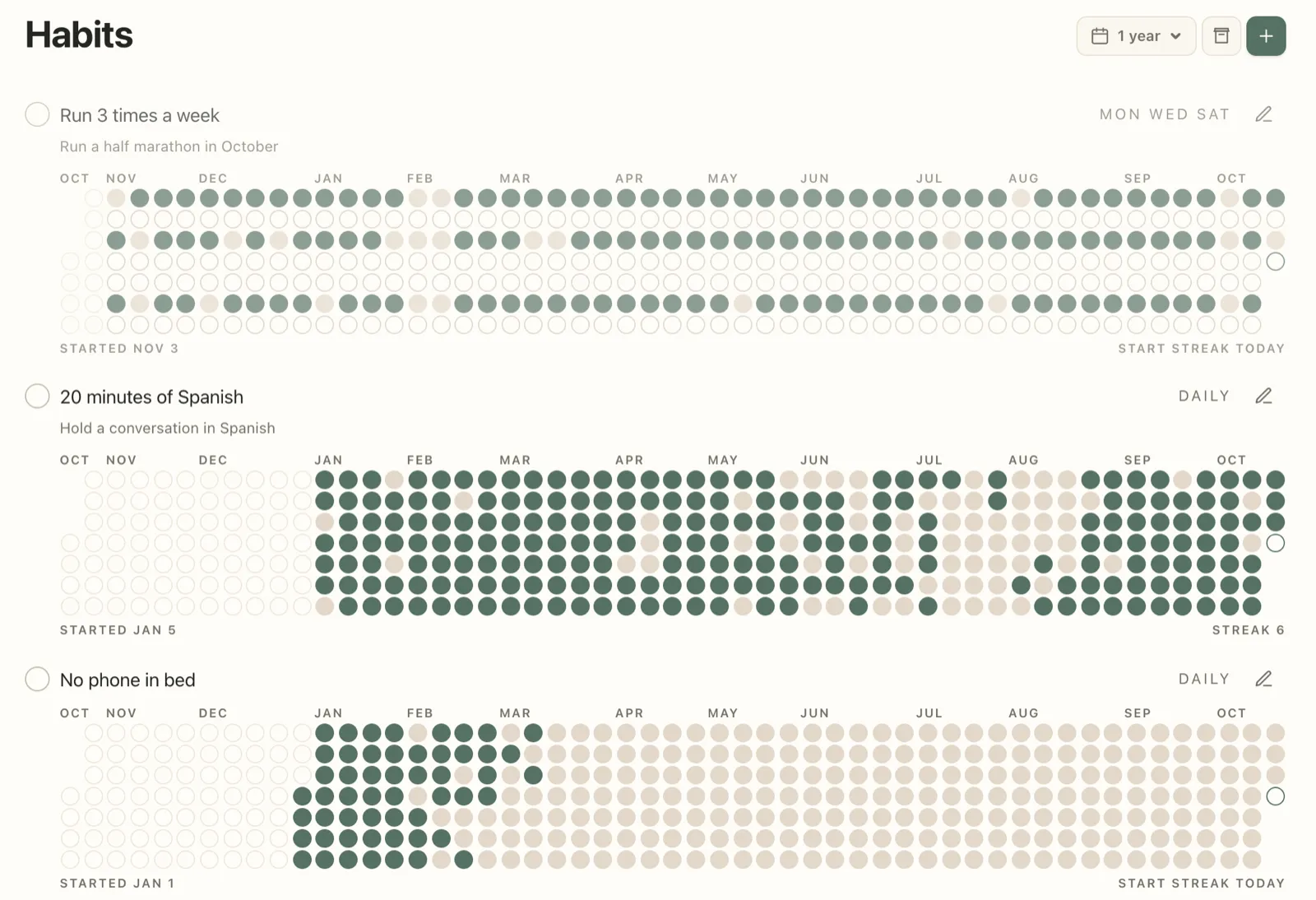
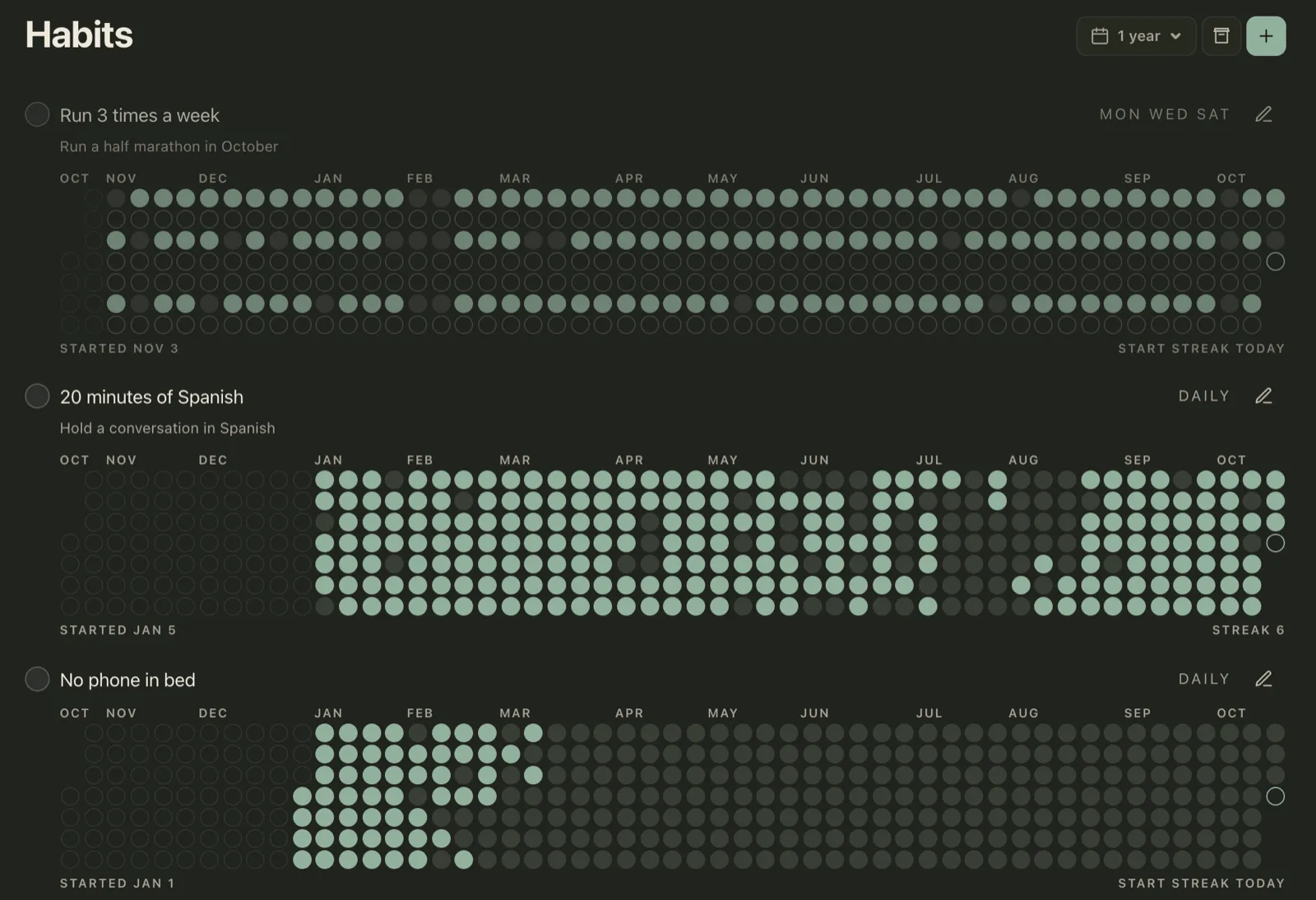
Your habits are good evidence for questions 4 and 5. In Plannedo, set Habits to Date range: 1 year and every habit shows a year of check-ins as a grid of dots. Patterns you’d never remember jump out: the habit that held, the one that slumped every summer, the one that quietly died in March.
Carrying it forward
- What will I keep doing, what will I stop, and what will I start? Three short lists. Keep is the easiest to skip and the most useful: it protects what already works.
- What one word do I want for next year? A direction, not a target: “lighter”, “outside”, “finish”.
- Which one to three goals matter most next year, and what is the first step for each? Three at most. A goal without a first step and a date is a wish.
- What would I like to write here a year from now? Write it as a short note to read at your next review.
48 more year in review questions, by area of life
Pick the areas that mattered this year and skip the rest. Six questions each.
Work and career
- What work am I proudest of, even if nobody else noticed it?
- What did I say yes to that I should have declined?
- Which skill did I use most, and which one did I wish I had?
- Who taught me the most at work this year?
- Which recurring task do I dread, and could I hand it off, change it or drop it?
- If I could redo this year at work, what would I cut first?
Money
- What did I spend money on that was worth every cent?
- What did I pay for and barely use?
- Did I save what I meant to save? If not, where did it go?
- Which money decision am I glad I made?
- Which money worry took up the most room in my head, and is it still real?
- What would make next year’s finances feel calmer?
Health and energy
- When did I have the most energy this year, and what was different then?
- How did I sleep, honestly?
- Which kind of movement did I enjoy enough to keep doing?
- What drained me that I kept doing anyway?
- Which check-up or appointment have I been putting off?
- What helped on the hard days?
People and relationships
- Who did I spend the most time with, and did I choose that?
- Which friendship grew this year, and which one faded?
- Who do I owe a thank-you, an apology or a phone call?
- When did I feel most like myself with other people?
- Who did I help, and how?
- Who do I want to see more of next year?
Learning and growth
- What do I know now that I didn’t know in January?
- Which book, course, podcast or conversation changed how I think?
- What did I change my mind about?
- What scared me that I did anyway?
- Which mistake taught me the most?
- What do I want to be able to do by next December?
Home and everyday life
- Which routine made my days easier?
- What annoyed me at home all year and would take an hour to fix?
- Which part of an ordinary week did I enjoy most?
- What do I own that I could let go of?
- Does my space still fit the way I live?
- Which small daily habit would I keep even if nobody ever knew about it?
Fun and adventure
- What was the most fun I had this year?
- Where did I go that was new to me?
- What did I try for the first time?
- When did I lose track of time in a good way?
- What did I keep meaning to do for fun and never did?
- What do I want to do next year just because it sounds fun?
Inner life
- How am I different from the person I was in January?
- What did I worry about that never happened?
- When did I act on what matters to me, and when didn’t I?
- What did I forgive, in myself or in someone else?
- What am I still carrying that I could put down?
- What do I want to remember about this year in ten years?
Year in review questions for couples
Do your own review first, then sit down together for 30 to 45 minutes with both calendars open. Take turns answering, and listen more than you correct.
- What was our best day together this year?
- What did we get through as a team?
- When did you feel most supported by me, and when least?
- What did we try together for the first time?
- What’s one small thing you do that I’m grateful for?
- What did we argue about most, and what would make it easier next time?
- Where did our time and money go as a couple, and does that match what we want?
- What did each of us need more of this year?
- Which tradition did we start, or want to start?
- What do we want next year to feel like, and which plan can we put on the calendar tonight?
Year in review questions for kids
Four or five questions at dinner are plenty, and drawing an answer counts. Write their words down exactly as they say them and keep the pages: reading last year’s answers next December is half the fun.
- What was the best day of your year?
- What did you learn to do this year?
- What was hard, and how did you get through it?
- Who was a good friend to you?
- What made you laugh the most?
- What are you proud of?
- What was your favourite place we went?
- What was your favourite book, show or game?
- What do you want to learn next year?
- If this year were a picture, what would be in it?
Turn your answers into next year
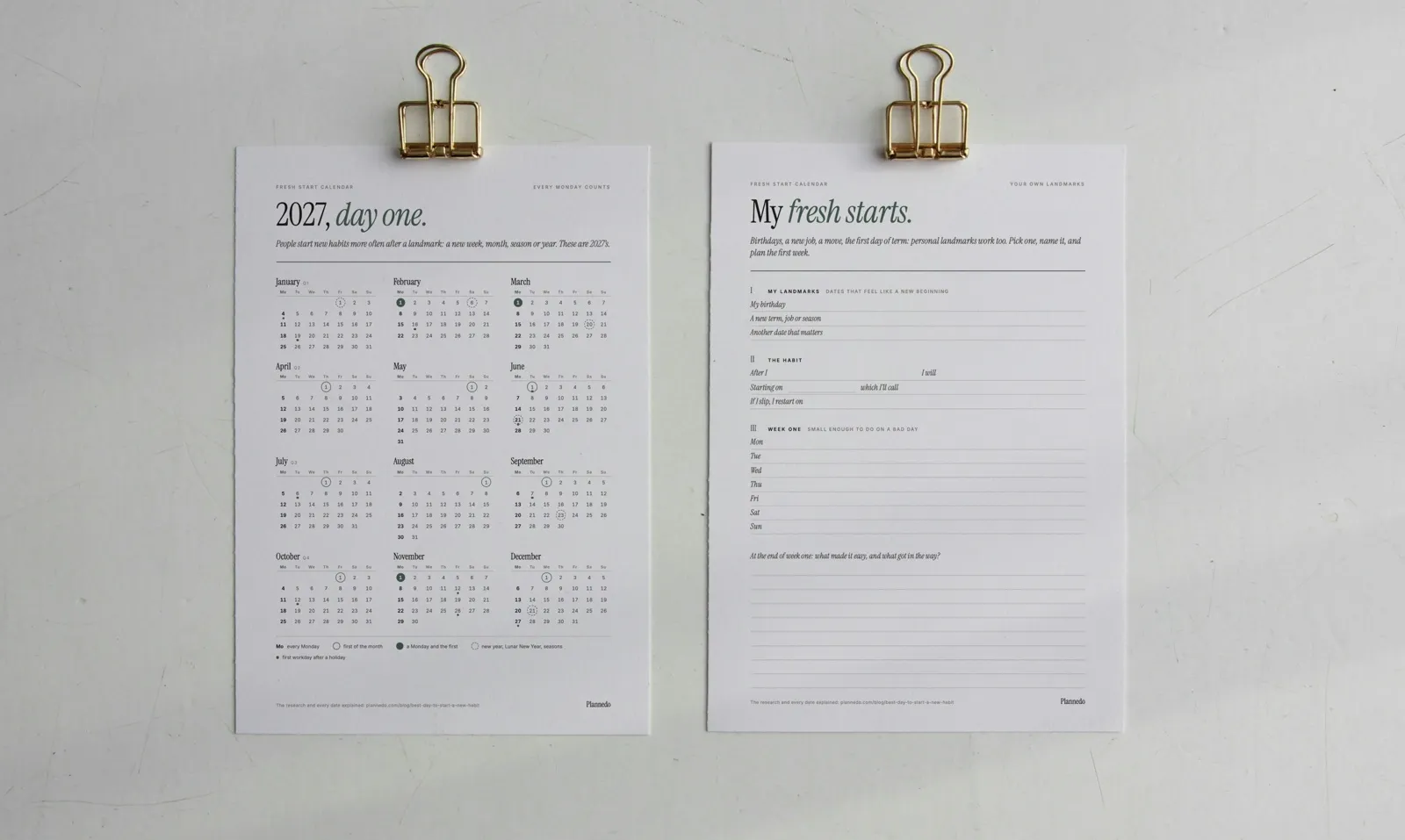
A review that stays on paper changes nothing. The start of a year helps here: Hengchen Dai, Katherine Milkman and Jason Riis found that Google searches for “diet”, gym visits and commitments to goals all rise after temporal landmarks like a new week, month or year. They called it the fresh start effect. The trick is to use that push on the right things, the ones your review picked out, rather than on a generic list of resolutions. If January feels crowded, any Monday works too.
- Turn Start into habits. Each item in your Start box becomes one small habit with a schedule. Habit tracker ideas has a hundred if you need help making them small.
- Turn the one to three goals into goals with a picture. Write each as a specific, hard result with a deadline (how to set goals has the steps), and a vision board for each keeps them in sight after January. In Plannedo a goal can have a Year deadline, and you can link the new habits to it.
- Give each goal its first step on a date in January. Not “start running”, but “Saturday 2 January: 2 km, slowly”.
- Plan for the obstacle. For the goal most likely to stall, write down what will get in the way and what you’ll do then. The WOOP method is a ten-minute way to do it, and how to stick to New Year’s resolutions has the research on why it works.
- Put two dates in your calendar now. A mid-year check-in at the end of June, and the next year in review in the last week of December. (If one check-in feels too few, plan the year as four 12-week cycles instead.) In Plannedo they’re two tasks with dates; the sheet has a line for each.
Between those dates, a short weekly review keeps the year from blurring again: next December you’ll have 52 small reviews to look back on instead of one big guess.
FAQ
When should you do a year in review?
In the last week of December or the first week of January, when most people have a few quiet days. Any end of a year works, though: your birthday, the end of a school year, or the anniversary of a new job. What matters is setting aside about 90 minutes and having your calendar and photos at hand.
How long does a year in review take?
About 90 minutes: 20 minutes to walk the year month by month with your calendar and photos, 45 minutes for the looking-back questions, and 25 minutes to decide what to keep, stop and start and to set one to three goals. A short version, twelve month lines and the twelve core questions, fits in an hour.
What’s the difference between a year in review and an annual review?
For personal planning they’re the same thing: a structured look back at the past twelve months and a plan for the next twelve. At work, “annual review” usually means a performance review with your manager. The questions in this guide are for yourself, though the work section is good preparation for that meeting too.
What if it was a bad year?
Do the review anyway, and keep it shorter. Write the month lines, then answer three questions: what you got through, who helped, and what you’ll do differently. Be as kind to yourself as you’d be to a friend: research by Breines and Chen found that self-compassion after a failure makes people more motivated to improve, not less.
How do you do a year in review with your partner?
Each of you does a personal review first, then you sit down together for 30 to 45 minutes with both calendars open. Take turns with the couples questions, starting with your best day together. End with one plan for next year that you put on the calendar right away.
How do you do a year in review with kids?
Ask four or five simple questions at dinner, such as the best day of the year, something they learned and something hard they got through. Let younger children draw their answers. Write their words down exactly and keep the pages, so you can read them together next year.
What do you do with the answers?
Keep the sheet where you’ll find it next December. Turn the Start list into small habits, give each of your one to three goals a first step on a date in January, and put a mid-year check-in and next year’s review on your calendar. Reread the sheet at the check-in.
Studies mentioned
- Kahneman, D., Fredrickson, B. L., Schreiber, C. A., & Redelmeier, D. A. (1993). When more pain is preferred to less: Adding a better end. Psychological Science, 4(6), 401-405.
- Emmons, R. A., & McCullough, M. E. (2003). Counting blessings versus burdens: An experimental investigation of gratitude and subjective well-being in daily life. Journal of Personality and Social Psychology, 84(2), 377-389.
- Breines, J. G., & Chen, S. (2012). Self-compassion increases self-improvement motivation. Personality and Social Psychology Bulletin, 38(9), 1133-1143.
- Dai, H., Milkman, K. L., & Riis, J. (2014). The fresh start effect: Temporal landmarks motivate aspirational behavior. Management Science, 60(10), 2563-2582.